A forensic editorial investigation into the mechanics of coordinated digital outrage, tactical keyword repetition, geopolitical timing ahead of major summits, and the weaponization of memetic warfare in India’s political sphere.
- Linguistic Synchronization: Within a compressed 24-hour window following a political social media post by BJP Karnataka referencing "Dimaagi Naxals", multiple high-follower influencer handles and verified party accounts deployed identical hyperbolic anchors — specifically "Jallianwala Bagh", "genocide of youth", and "shooting youngsters dead".
- International Escalation Protocol: The synchronized campaign deliberately targeted international multilateral bodies (tagging
@UN,@UNinIndia), timing the outrage cycle ahead of high-profile international diplomatic events such as the SCO (Shanghai Cooperation Organisation) Summit to project an image of internal instability. - Ideological Continuity & Hero-Making: The digital ecosystem continuously rehabilitates and normalizes figures undergoing judicial trials under statutory anti-terror laws (UAPA), framing legal proceedings as "persecution" while ignoring documented judicial charge-sheets.
- Symmetrical Meme Warfare: In response to synchronized outrage scripts, counter-ecosystems deploy aggressive memetic caricatures (from leash analogies to familial satire), demonstrating how Indian political discourse has transformed into an unregulated theater of cognitive warfare.
1. Introduction: Anatomy of a Coordinated Digital Wave
In the modern information ecosystem, the line between spontaneous public reaction and organized narrative engineering has become increasingly blurred. In late August and early September 2026, a political video post published by the state unit handle of BJP Karnataka containing the phrase “No slowing down - taking on ‘Dimaagi Naxals’ with full force!” triggered a sudden, synchronized wave of outrage across X (formerly Twitter).
What caught the attention of digital communication researchers was not merely the political criticism itself — which is standard in a robust constitutional democracy — but the striking uniformity in vocabulary, temporal clustering, and international escalation framing observed across disparate handles within hours of each other.
Rather than engaging with the specific policy debate or political rhetoric, the response instantly converged around extreme historical analogies: allegations of an impending “Jallianwala Bagh on fellow citizens” and an ungrounded narrative of a “war cry for genocide against Indian youth.”
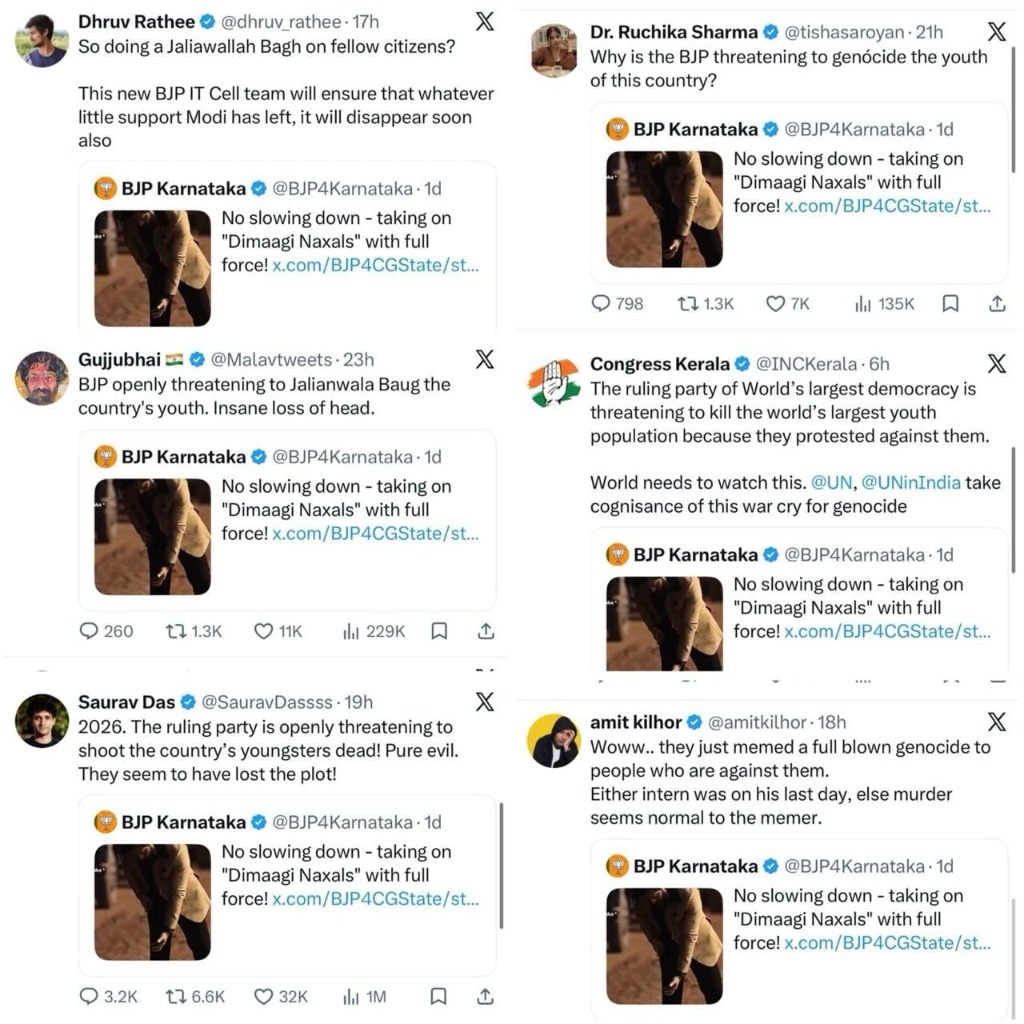 Figure 1: Chronological aggregation of synchronized reaction posts across major political and influencer handles, illustrating identical keyword convergence.
2. Pattern Recognition: The Mechanics of Keyword Clustering
When social media activity is organic, user responses typically reflect diverse phrasing, varied perspectives, and dispersed posting times. In contrast, coordinated influence operations (often referred to colloquially in Indian political discourse as “toolkits”) exhibit telltale forensic signatures:
Temporal and Phrasing Comparison Matrix
| Handle / Entity | Follower Scale | Exact Phrasing / Analogy Deployed | Target Mention / Escalation |
|---|---|---|---|
Dhruv Rathee (@dhruv_rathee) | Millions | “So doing a Jaliawallah Bagh on fellow citizens? This new BJP IT Cell team will ensure that whatever little support Modi has left…” | Domestic Political Framing |
Dr. Ruchika Sharma (@tishasaroyan) | Academic/Influencer | “Why is the BJP threatening to genocide the youth of this country?” | Existential Genocide Framing |
Gujjubhai (@Malavtweets) | Viral Commentator | “BJP openly threatening to Jalianwala Baug the country’s youth. Insane loss of head.” | Historical Atrocity Analogy |
Congress Kerala (@INCKerala) | Official Political Entity | “The ruling party of World’s largest democracy is threatening to kill the world’s largest youth population… World needs to watch this. @UN, @UNinIndia take cognisance of this war cry for genocide” | Direct Multilateral Escalation (@UN) |
Saurav Das (@SauravDassss) | Independent Journalist | “2026. The ruling party is openly threatening to shoot the country’s youngsters dead! Pure evil…” | Physical Execution Narrative |
Amit Kilhor (@amitkilhor) | Influencer | “Woww.. they just memed a full blown genocide to people who are against them…” | Genocide Assertion |
Forensic Inferences:
- The “Jallianwala Bagh” Anchor: Two prominent handles independently misspelling or deploying the British colonial massacre analogy within hours indicates a shared talking-point brief.
- The “Genocide” Escalation: Multiple accounts simultaneously escalating a political metaphor against ideological extremists into a literal claim of state-planned mass slaughter against ordinary youngsters.
- Multilateral Tagging: The official Congress Kerala handle explicitly tagging international bodies (
@UN,@UNinIndia), seeking to internationalize domestic political friction.
3. Geopolitical Timing: Why the SCO Summit & Global Events Matter
In the calculus of modern information warfare, timing is everything. Synchronized narrative campaigns rarely happen in a vacuum. They frequently coincide with major diplomatic summits where India’s global stature is in focus:
- The SCO (Shanghai Cooperation Organisation) Window: Ahead of regional summits involving Eurasian powers, foreign policy think tanks and diplomatic observers closely monitor domestic stability indices. Amplifying tags like
@UNand terms like “genocide” creates international search engine spikes designed to produce hostile headlines in Western media outlets. - Narrative Laundering: An influencer posts a hyperbole $\rightarrow$ A party handle quotes it tagging international organizations $\rightarrow$ A foreign correspondent tweets the controversy $\rightarrow$ International human rights indices downgrade India’s democratic ranking based on curated social media noise.
This multi-stage amplification cycle allows partisan domestic rhetoric to be repackaged as objective human rights data abroad.
4. Normalization of Radicalism: The Umar Khalid Case Study
A core characteristic of the intellectual ecosystem under examination is the systematic rehabilitation of individuals facing grave legal charges under Indian counter-terrorism legislation.
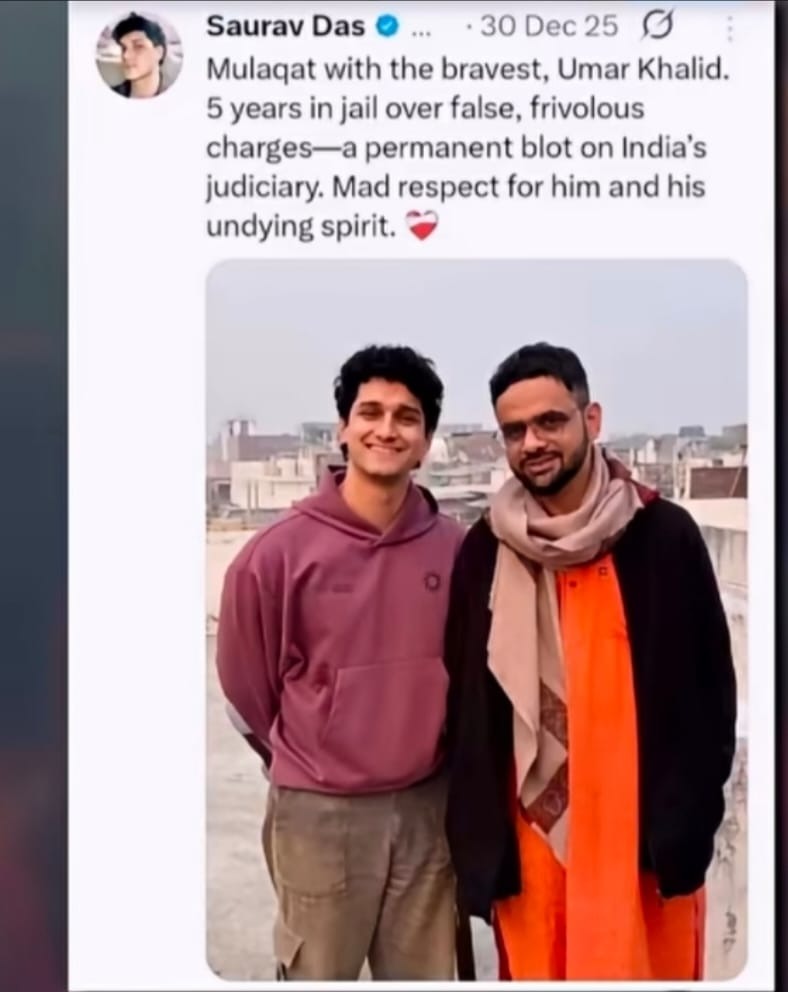 Figure 2: Saurav Das sharing a photograph with Umar Khalid, framing statutory judicial custody as a “permanent blot on India’s judiciary.”
Legal and Judicial Reality vs. Online Hero-Making
In public posts (Figure 2), social commentators frequently describe Umar Khalid’s incarceration as “false, frivolous charges” and an attack on democratic dissent.
However, primary legal documentation tells a starkly different story:
- Supreme Court and Delhi High Court Rulings: In repeated bail rejections under the Unlawful Activities (Prevention) Act, 1967 (UAPA), the courts observed that prima facie evidence indicated a premeditated conspiracy to cause communal disruption during the February 2020 Delhi riots, timed specifically with the visit of then-US President Donald Trump.
- The Judicial Distinction: The judiciary explicitly distinguished between lawful political dissent under Article 19(1)(a) and the orchestration of road blockades (chakka jams) aimed at precipitating violent confrontation.
- Ecosystem Strategy: By attacking the judiciary itself (“a permanent blot on India’s judiciary”), the ecosystem attempts to delegitimize constitutional institutions whenever legal outcomes do not align with their ideological goals.
5. Ideological Lineage: From Yasin Malik to Modern Campus Activism
The phenomenon of the “Dimagi Naxal” (Urban / Intellectual Naxalism) is not a new creation of the social media era; it represents a decades-old lineage of intellectual cover provided to violent separatism.
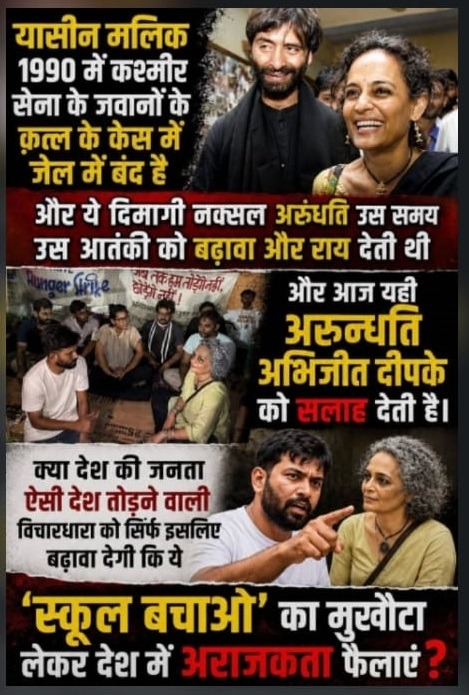 Figure 3: Political poster tracing the historical links between intellectual figures (Arundhati Roy), convicted terrorists (Yasin Malik), and modern digital/campus protest leadership.
Documented Historical Precedents:
- Yasin Malik & The 1990 IAF Killings: Yasin Malik, convicted for funding terror networks and undergoing life imprisonment for the killing of unarmed Indian Air Force personnel, was routinely courted, legitimized, and platformed by intellectual circles in New Delhi during the 1990s and 2000s under the guise of “civil society dialogue.”
- Arundhati Roy’s Speeches: In 2010, Roy shared stages in New Delhi with Syed Ali Shah Geelani and spoke of Kashmir as not being an integral part of India, which subsequently led to legal scrutiny under Section 13 of the UAPA.
- The “School Bachao” Facade: Figure 3 illustrates the contemporary political critique: how genuine student grievances (such as school welfare or examination delays) are co-opted by seasoned ideological figures to instigate broader systemic disruption and anti-state agitation.
6. Satirical Warfare: The Counter-Ecosystem Strikes Back
As the Left-liberal ecosystem deploys coordinated textual panic scripts, nationalist and pro-government digital creators have increasingly turned to aggressive visual satire and memetic caricature to expose perceived hypocrisies.
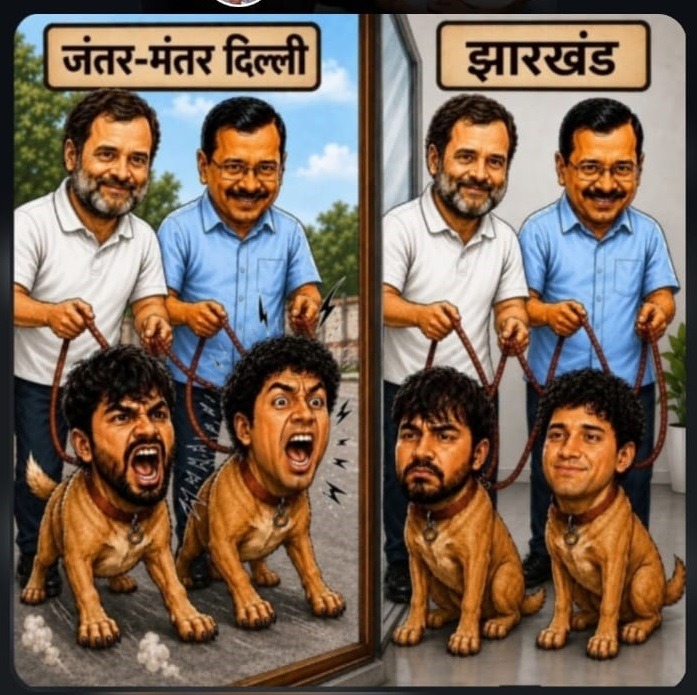
Figure 4: Caricature satirizing the tactical modulation of protest outrage based on state electoral geography.
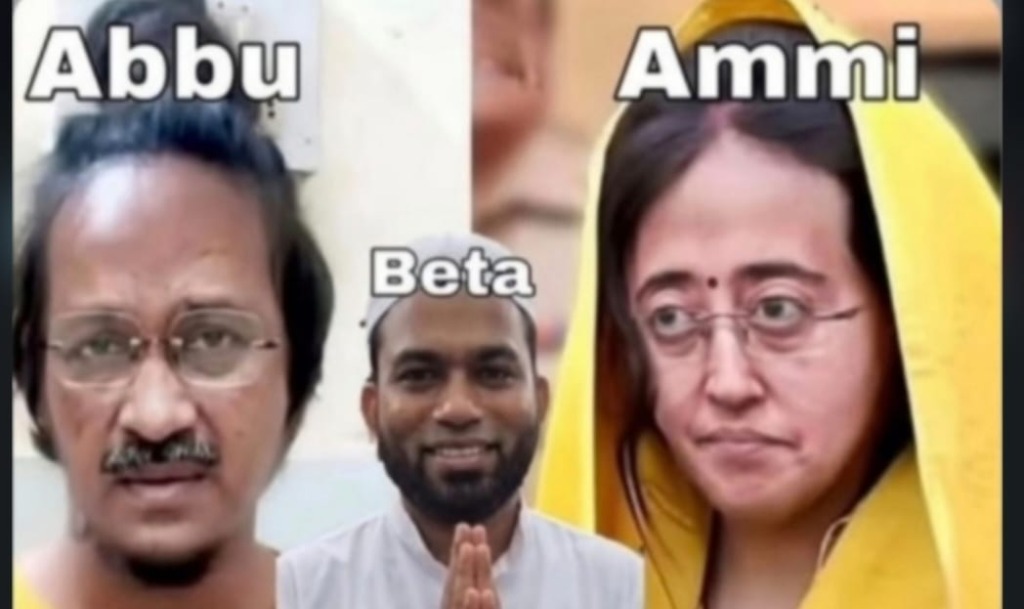
Figure 5: Memetic satire highlighting ideological and electoral alliances.
The Narrative Behind the Memes:
- The Geographical Double Standard (Figure 4):
- In Delhi (governed by the central government/BJP opposition), digital influencers are depicted as aggressive attack dogs unleashed at Jantar Mantar to amplify anti-government outrage.
- In states governed by opposition coalitions (e.g. Jharkhand or Bengal), the exact same influencers remain docile and silent regarding governance failures, administrative corruption, or communal incidents (e.g. Sandeshkhali).
- Memes as Cognitive Weapons (Figure 5):
- High-speed visual memes bypass long editorial rebuttals, delivering instant political messaging to millions of mobile users across WhatsApp, Telegram, and Instagram.
7. Comparative Framework: Legitimate Dissent vs. Narrative Sabotage
To maintain intellectual consistency and evidence-first standards, DimagiNaxalite establishes a clear demarcation between legitimate democratic opposition and coordinated cognitive sabotage:
graph TD
    A[Public Discourse / Criticism] --> B{Evidentiary Standard}
    B -->|Ground-Truth Facts, Official Records, Peaceful Advocacy| C[Legitimate Democratic Participation]
    B -->|Synchronized Hyperbole, Genocide Hoaxes, UN Tagging| D[Coordinated Narrative Warfare]
    C --> E[Protected Under Article 19 1 a]
    D --> F[Cognitive Sabotage & Disinformation Toolkit]
    F --> G[Targeting National Stability Ahead of Global Summits]
Key Differences:
- Legitimate Dissent: Questions budgetary allocations (e.g., MGNREGA cuts), points out administrative lapses, files RTIs, and challenges policies in court.
- Narrative Sabotage: Fabricates claims of state-sponsored mass murder, equates political slogans with the Jallianwala Bagh massacre, tags foreign governments to invite sanctions, and attacks the legitimacy of the Supreme Court when bail is denied to terror accused.
8. Conclusion: Building Democratic Resilience Against Cognitive Warfare
The viral episode surrounding the “Dimaagi Naxal” discourse provides a textbook case study in 21st-century narrative warfare. As India ascends as a global economic and geopolitical powerhouse hosting world summits like the SCO, the battleground of national security has extended into the digital sphere.
The Way Forward:
- Algorithmic Transparency: Platforms must disclose coordinated inauthentic behavior, bot amplification, and sudden hashtag syndication.
- Citizen Media Literacy: Readers must learn to spot synchronized keyword drops (“Jallianwala Bagh”, “Genocide”) and question the hidden political timelines behind viral panic.
- Commitment to Evidence: Ideological outrage should never substitute for empirical evidence. Whether a claim comes from the Left or the Right, democratic citizens must demand primary sources, court records, and verified datasets.
Investigated by the DimagiNaxalite Propaganda Watch Desk. Full source documents and forensic tweet timestamps archived on our public research servers.
Reader Perspectives