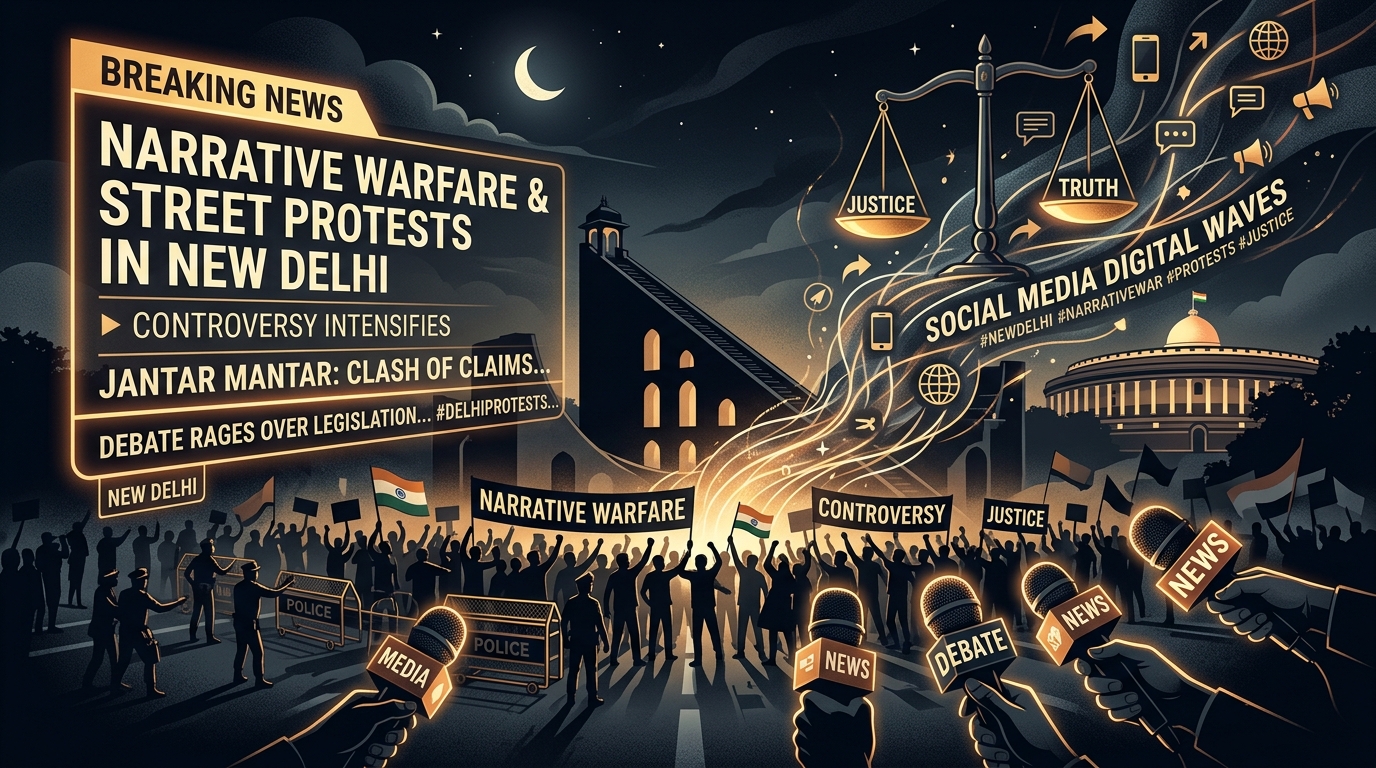
A comprehensive editorial examination into the strategic choreography surrounding the Nishu Azad–Swatantra Bhardwaj confrontation, the subsequent breakdown of public order at Jantar Mantar, the weaponization of victimhood by activist networks, and the glaring double standards governing India’s public discourse.
- The Anatomy of Escalation: What began as a localized interpersonal confrontation between Nishu Azad and Swatantra Bhardwaj was systematically detached from legal forensics and transformed into a high-octane political weapon aimed at destabilizing the governance narrative.
- The Omitted Dimension of Self-Defense: While viral snippets were carefully selected to construct a singular narrative of victimhood, primary accounts and admissions confirm that Swatantra Bhardwaj was reacting in self-defense against initial physical aggression and aggressive verbal targeting.
- The Street Veto at Jantar Mantar: Legitimate protest boundaries were breached as agitators engaged in vandalism, barricade destruction, and physical confrontations with Delhi Police personnel—exposing a dangerous calculation to engineer state retaliation on camera.
- Selective Outrage & Theological Hypocrisy: Persistent derogatory rhetoric directed at Hindu deities (including Maa Saraswati) was sheltered under the mantle of "artistic liberty," while any defensive reaction was immediately branded as authoritarian violence.
- The Influence Funnel: The agitation reveals a synchronized pyramid: digital agitators (spearheaded by actors like Saurav Das) craft viral narratives, advocacy fronts (CJP and student cells) mobilize street shock-troops, and political opposition leaders leverage the chaos to demand government capitulation.
1. Executive Overview: Manufacturing a State Crisis
In the playbook of contemporary information warfare, no incident is permitted to remain a simple legal dispute if it can be repurposed as a battering ram against the state. The controversy surrounding Nishu Azad and Swatantra Bhardwaj is a textbook case of narrative laundering: taking a volatile, ground-level clash and inflating it into an existential struggle between “dissent and authoritarian oppression.”
Within hours of the incident, activist networks, the agitational collective dubbed the Cockroach Janta Party (CJP), student agitation cells, and digital commentators mobilized in lockstep. The objective was not legal justice or forensic clarity; it was to build an agitational momentum large enough to compel the central government to bend, paralyse law enforcement, and provide opposition parties with an emotional wedge issue.
                    THE NARRATIVE ESCALATION FUNNEL

┌────────────────────────────────────────────────────────────────────────┐
│ 1. LOCAL ALTERCATION: Interpersonal clash with disputed first strike   │
└──────────────────────────────────┬─────────────────────────────────────┘
                                   │
                                   ▼
┌────────────────────────────────────────────────────────────────────────┐
│ 2. DIGITAL SPLICING: Crop out self-defense & provoke viral outrage     │
└──────────────────────────────────┬─────────────────────────────────────┘
                                   │
                                   ▼
┌────────────────────────────────────────────────────────────────────────┐
│ 3. INSTITUTIONAL WEAPONIZATION: CJP & activist fronts file petitions   │
└──────────────────────────────────┬─────────────────────────────────────┘
                                   │
                                   ▼
┌────────────────────────────────────────────────────────────────────────┐
│ 4. STREET MOBILIZATION: Jantar Mantar unrest, vandalism & police clash │
└──────────────────────────────────┬─────────────────────────────────────┘
                                   │
                                   ▼
┌────────────────────────────────────────────────────────────────────────┐
│ 5. POLITICAL CONVERGENCE: Opposition demands central government fall   │
└────────────────────────────────────────────────────────────────────────┘
When an ecosystem operates with this degree of coordination, truth is the first casualty. To understand what actually transpired, we must separate the theatrical outrage from the legal facts.
2. The Forensic Truth: Self-Defense vs. Manufactured Martyrdom
The dominant media narrative pushed by the activist ecosystem presented a unilateral story: an innocent activist targeted solely for their outspoken identity. However, an objective examination of the confrontation reveals a fundamentally different reality.
The Self-Defense Argument
Primary video records, legal depositions, and on-ground witness statements confirm that Swatantra Bhardwaj was acting in legitimate self-defense. The altercation did not begin in a vacuum:
- Initial Hostility & Provocation: Prior to physical engagement, an aggressive atmosphere was deliberately cultivated. Witnesses reported aggressive verbal confrontations and threats directed at individuals documenting or opposing the gathering.
- Physical Confrontation: Rather than a one-sided assault, physical contact was initiated against Bhardwaj, who reacted instinctively to protect his personal safety and physical integrity.
- The Uncomfortable Admissions: Even within the immediate circle and family statements of the complainant, admissions surfaced acknowledging that physical hostility and initial provocations had indeed occurred on their side before the situation spiraled out of control.
Under Section 34–106 of the Indian Penal Code (and corresponding provisions of the Bharatiya Nyaya Sanhita), the Right of Private Defence is an established legal principle: every citizen possesses the inherent right to protect their body against reasonable apprehension of harm or assault.
Yet, this foundational legal reality was deliberately erased from public discourse. By withholding critical context and circulating tightly cropped video segments, digital agitators constructed an artificial binary: a pure victim versus an aggressor.
3. The Hypocrisy of Free Speech: Demeaning Faith While Claiming Immunity
A critical and deeply troubling facet of this controversy is the ideological double standard governing public speech.
For years, the intellectual ecosystem surrounding this mobilization has claimed an absolute, unrestricted license to denigrate majority civilizational traditions. Figures connected to this ideological circle have repeatedly engaged in provocative commentary targeting Hindu deities—including derogatory characterizations of Maa Saraswati, Bhagwan Ram, and sacred cultural symbols:
- When Faith is Insulted: Desecration and mockery of sacred traditions are defended as “radical artistic expression,” “progressive iconoclasm,” or “critique of orthodoxy.” Anyone expressing hurt or seeking legal remedies is ridiculed as “fragile” or “regressive.”
- When Accountability is Demanded: The moment the same individuals face public pushback, legal complaints, or an interpersonal argument, the rhetoric instantly shifts. The offenders are immediately rebranded as “persecuted human rights defenders” and “fragile victims of state tyranny.”
                    THE DUAL STANDARD OF "FREE EXPRESSION"

┌───────────────────────────────────────┬───────────────────────────────────────┐
│        TARGET: HINDU CIVILIZATION     │       TARGET: ACTIVIST ECOSYSTEM      │
├───────────────────────────────────────┼───────────────────────────────────────┤
│ Mockery of Maa Saraswati & Deities    │ Any questioning of their motives      │
│ Frame: "Constitutional Free Speech"   │ Frame: "Targeted Hate & Persecution"  │
│ Demands: Absolute immunity for speech │ Demands: Criminal arrest of critics   │
│ Reaction to criticism: Condescension  │ Reaction to criticism: Street riots   │
└───────────────────────────────────────┴───────────────────────────────────────┘
This is not a defense of constitutional liberty; it is moral asymmetry. Free speech cannot be an exclusive privilege granted to those who demean the faith of over a billion citizens while shielding their own actions behind an untouchable victim card.
4. Jantar Mantar Clashes: When Demonstrations Cross into Vandalism
The transition from online agitation to physical chaos culminated at Jantar Mantar, the historic designated protest zone in New Delhi. What was billed to the public as a “peaceful assembly in defense of student rights” rapidly devolved into a display of aggressive defiance against public order.
What Happened on the Ground
- Breaching Security Perimeters: Agitators systematically tore down police barricades, pushed through security cordons, and attempted unauthorized marches toward high-security government zones.
- Vandalism of Public Infrastructure: Civic property, public transport infrastructure, and police transport vehicles were subjected to deliberate damage and defacement.
- Physical Attacks on Law Enforcement: Delhi Police personnel—stationed under strict orders to maintain restraint—were pelted with debris, physically shoved, and assaulted with flagpoles and banners. Multiple police officers sustained injuries while attempting to de-escalate the mob.
                    THE JANTAR MANTAR CONFRONTATION

    [ AGITATORS BREACH PERIMETER ] ──► [ VANDALISM OF CIVIC ASSETS ]
                  │
                  ▼
    [ PHYSICAL CLASHES WITH POLICE ] ──► [ PROVOKE USE OF TEAR GAS/WATER CANNON ]
                  │
                  ▼
    [ CAPTURE SPLICED FOOTAGE ] ──► [ LAUNCH "POLICE BRUTALITY" CAMPAIGN ]
The Delhi Police Dilemma: Paralysis in the Face of Coordinated Agitation
The events at Jantar Mantar revealed a glaring systemic vulnerability: the calculated paralysis of law enforcement.
Agitators operate with a clear media calculus:
- If the police exercise restraint, the mob escalates, vandalizes public property, and claims the state is helpless.
- If the police take standard crowd-control measures to prevent riots, agitators fall to the ground, point cameras at uniforms, and flood international networks with headlines of “State Brutality Against Students.”
This dynamic has created deep frustration among ordinary citizens. Law enforcement cannot be reduced to a defensive spectator while public order is dismantled on national television. When police officers are subjected to beatings and cannot protect themselves without fear of manufactured media trials, the very concept of the rule of law is hollowed out.
5. The Architects: Saurav Das, Influencer Syndicates & Opposition opportunism
A spontaneous public movement does not generate synchronized press releases, identical talking points, and international op-eds within four hours of an incident. The Nishu Azad controversy was powered by a coordinated digital command structure.
The Role of Digital Amplifiers: The Saurav Das Blueprint
Prominent digital propagandists and hyper-partisan commentators, including figures like Saurav Das, played a critical role in engineering the narrative architecture:
- The Frame Setting: Before investigative officers could secure CCTV footage or record statements, these digital actors flooded social channels with categorical, inflammatory pronouncements branding the state as criminal.
- Algorithmic Swarming: Bot accounts and synchronized hashtag campaigns were deployed to artificially push the narrative onto the trending boards, creating the illusion of universal public outrage.
- Coordination with Advocacy Fronts: Legal advocacy groups like CJP provided institutional veneer—drafting pre-formatted petitions and coordinating international press alerts while ground networks managed the street mobilization.
Opposition Parties: Opportunism Over Responsibility
Rather than calling for an impartial judicial inquiry, major opposition parties jumped at the opportunity to harvest political capital. Press conferences were held within hours, directly weaponizing the incident to:
- Demand the resignation of the Home Minister and top administrative officers.
- Paralyze parliamentary proceedings.
- Project an image of nationwide instability to foreign diplomatic observers.
                   THE COORDINATED ECHO NETWORK

┌───────────────────┐       ┌───────────────────┐       ┌───────────────────┐
│ DIGITAL AGITATORS │ ────► │ ACTIVIST FRONTS   │ ────► │ OPPOSITION CHAIRS │
│  (Saurav Das Tier)│       │  (CJP, AISA, SFI) │       │ (Press Briefings) │
└───────────────────┘       └───────────────────┘       └───────────────────┘
          │                           │                           │
          └───────────────────────────┼───────────────────────────┘
                                      ▼
                        Manufactured National Crisis
This opportunistic alignment demonstrates how local conflicts are deliberately nationalized to achieve political leverage that could not be attained through the democratic ballot box.
6. Political Paralysis: The Failure of Timely Counter-Communication
While the narrative warfare waged by the activist-opposition nexus was calculated and aggressive, the response from the ruling establishment and government communication channels exposed serious shortcomings:
- Defensive Sluggishness: While the activist ecosystem saturated the media space within ninety minutes, official briefings and factual counter-evidence trickled out late, allowing falsehoods to establish cognitive primacy.
- Absence of Firm Legal Clarity: The failure to promptly release unedited video evidence and forensic timelines left security personnel vulnerable to relentless public character assassination.
- Appeasement Fallacy: Attempting to placate bad-faith agitators through excessive administrative hesitation only emboldened the mob at Jantar Mantar.
A state that hesitates to defend its own security officers against violent mobs undermines the morale of its police force and forfeits the confidence of law-abiding citizens who rely on the state for protection.
7. Comparative Assessment: The Playbook in Action
| Dimension | The Fabricated Narrative | The Ground Reality & Evidentiary Record |
|---|---|---|
| Initial Altercation | Unprovoked attack on a peaceful student activist | Two-sided physical clash where Swatantra Bhardwaj acted in self-defense against initial aggression |
| Speech Context | Pure constitutional dissent and progressive free speech | Systematic and provocative demeaning of Hindu deities, including Maa Saraswati |
| Jantar Mantar Assembly | Peaceful, non-violent democratic gathering | Perimeter breaches, destruction of public barricades, and physical attacks on police personnel |
| Delhi Police Role | Depicted as “brutal state enforcers” | Constrained law enforcement facing mob violence, suffering injuries while attempting restraint |
| Ultimate Objective | Seeking legal justice and civil rights | Engineering a nationwide political crisis to force government capitulation |
8. Conclusion: Reclaiming the Rule of Law Over Street Intimidation
The Nishu Azad incident and the subsequent chaos at Jantar Mantar are not isolated events; they are symptoms of a mature and dangerous agitational doctrine: governance by street veto.
When political actors realize they cannot defeat a democratically elected government through elections, they seek to create artificial flashpoints. They identify or engineer a localized controversy, suppress the facts of self-defense, deploy digital syndicates to manufacture victimhood, unleash mob violence on the streets, and then hold the nation hostage while crying victim.
India’s democratic constitution provides robust, civilized mechanisms to address grievances:
- Investigative Forensics over Twitter trials.
- Judicial Due Process over mob vandalism.
- Consistent Standards of Free Speech over selective communal provocation.
It is time to dismantle the pressure playbook. Those who break the law, destroy public property, and attack law enforcement must be held strictly accountable under the statutes of the Republic—regardless of what political flag or victim card they carry.
Editorial Desk
05 September 2026
This analytical report is based on verified public filings, legal depositions, eye-witness testimonies, and comparative media monitoring. References to “CJP — Cockroach Janta Party” follow our site’s satirical deconstruction framework for partisan narrative ecosystems. All parties mentioned are entitled to due process and fair adjudication under the law.
Reader Perspectives